Remembrance
insiya dhatt
Margaret H. Johnson
April 1924 - March 2026
February 13, 1936 - November 7, 2025
June 16, 1952 – November 11, 2025
Use the form on the right to contact us.
You can edit the text in this area, and change where the contact form on the right submits to, by entering edit mode using the modes on the bottom right.
Po Box 410963
San Francisco, CA 94141
USA
A close-knit group of hand bookbinders, with shared interests in creating and collecting fine bindings, joined together to promote hand bookbinding and related book arts and to exchange information and ideas.
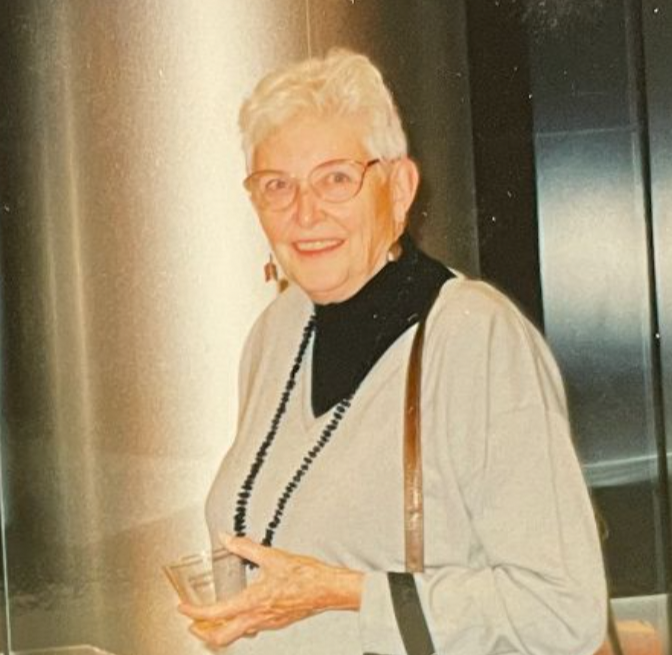
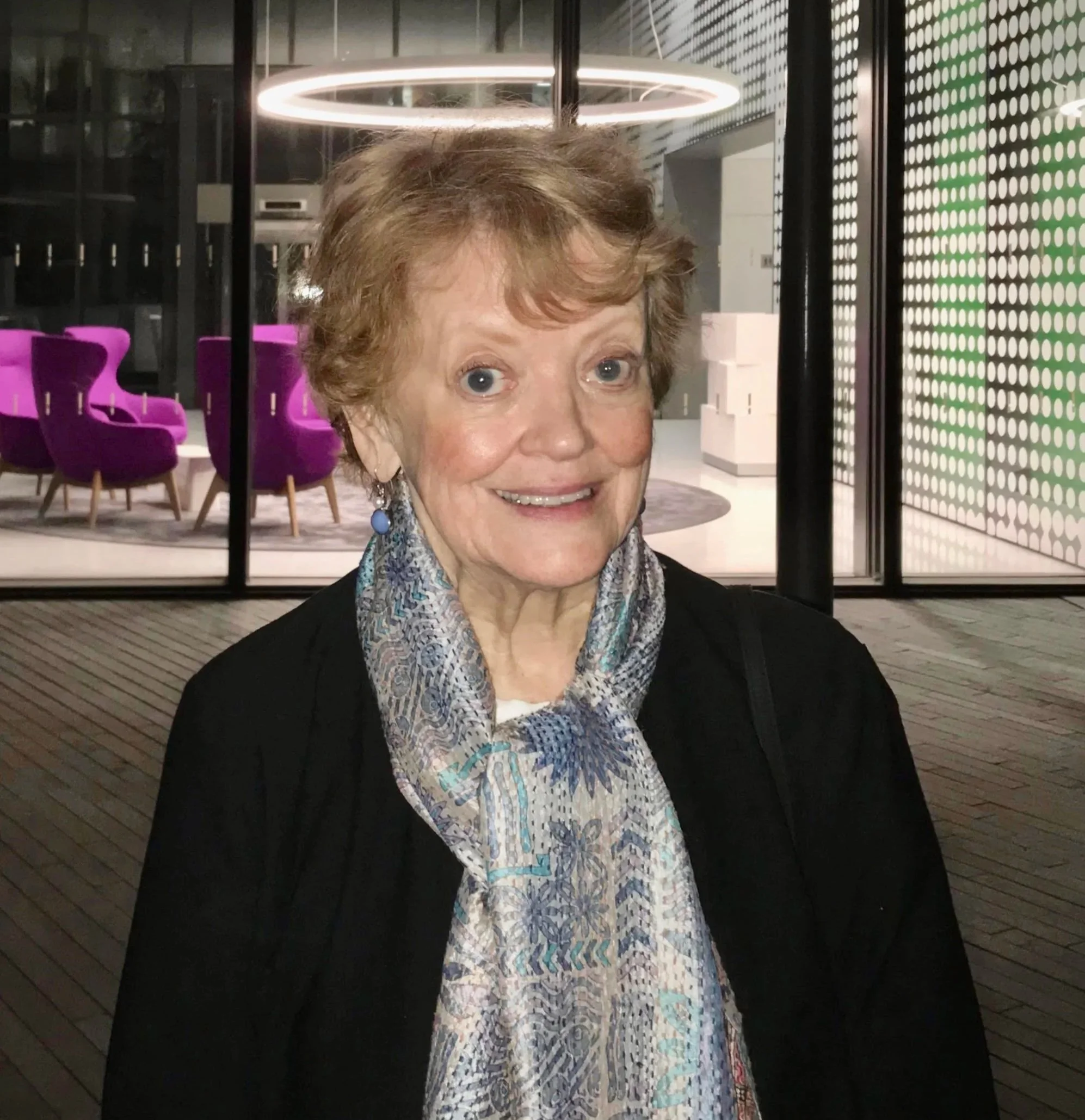
Margaret H. Johnson
April 1924 - March 2026
February 13, 1936 - November 7, 2025
June 16, 1952 – November 11, 2025
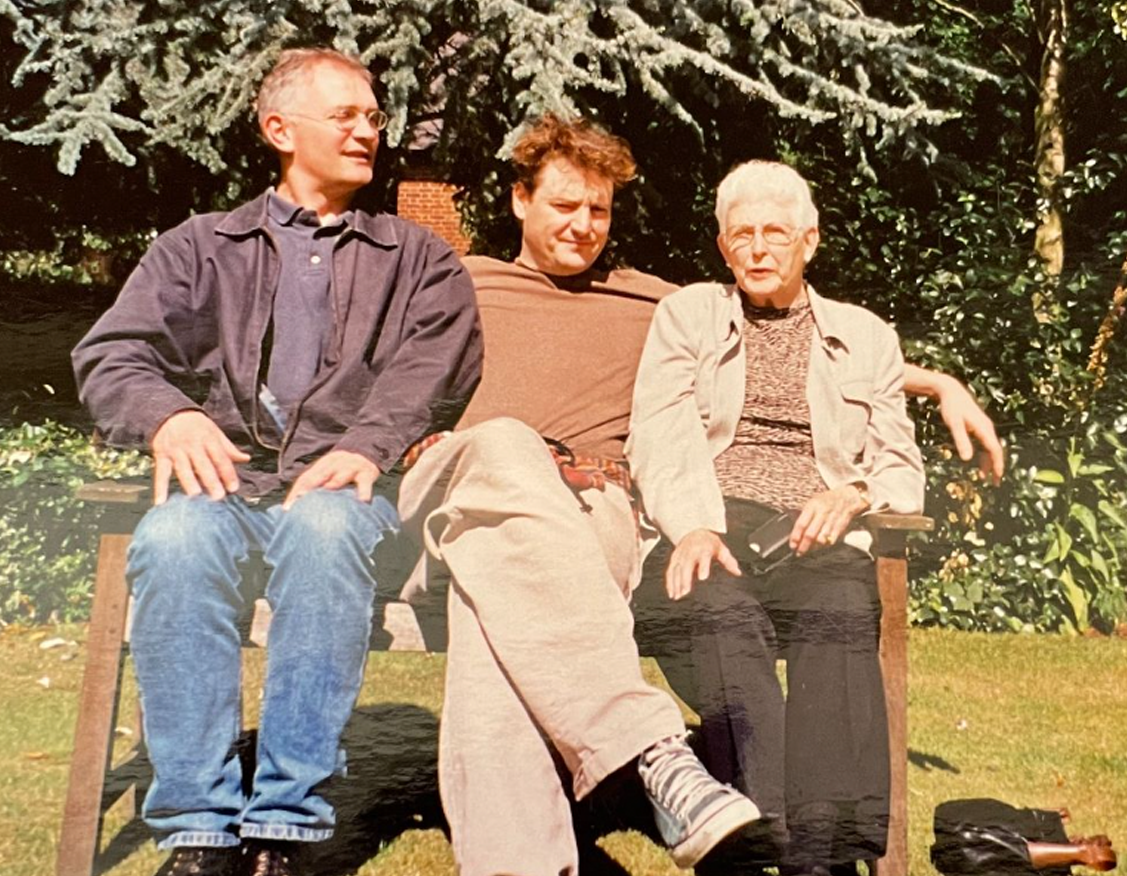
Michael Burke, Dominic Riley & Margaret H. Jackson
It is with sadness that we report the death of our long-term friend, colleague and champion of bookbinding, Margaret H. Johnson, who has died at the age of 101 at the Heritage on the Marina retirement home in San Francisco. It is not surprising that such a long life had many chapters—from her early years in a Quaker family in New Jersey, to her war-time wedding to Duncan, to the raising of three children and making many homes all across the country. Let’s not forget the amazing epic journey with the three children packed into a VW convertible bug as they travelled to relocate in California, following Duncan as his career progressed.
At a recent lunch, Margaret, who always loved to recount her adventures across a century, gave me a print-out of every address she had lived in so far. It was an impressive list, and she talked us through each one. Knowing that the Heritage was certainly to be her last address (and what an address it was) was an especially poignant moment for us all.
Others will I’m sure recall their memories of Margaret from earlier times, but mine began in 1992, when she came to live in the Bay Area for a third time in her life, after the early death of Duncan, to be nearer to her daughter Elizabeth (Lisa), son-in-law Tom, and grandson Nick. Her other daughter Anne was in New York, and son Tom in Los Angeles.
As soon as Margaret arrived in San Francisco, she plunged herself into the bookbinding community here. She joined the board of the Hand Bookbinders of California, playing many roles, including secretary and editor of the newsletter, Gold Leaf. Others will remember that for many years she edited the Guild of Bookworkers’ newsletter, working closely with typesetter Richard Siebert. She was also an active and supportive member of the Colophon Club, the Book Club of California, and for some years worked as a volunteer at the San Francisco Arboretum with her life-long friend, Jane Aaron, whom she loved dearly. Back east, Margaret had studied with Laura Young in New York, and volunteered at the Pennsylvania Hospital Historic Library in Philadelphia.
Margaret was not just a volunteer though. For many years in San Francisco she practiced book restoration, first from her apartment on Cabrillo street in the Richmond district, then at her next home on Pine Street closer to the city center, and finally, in her second-to-last home near the Embarcadero, where she maintained a much smaller workshop, because she loved the craft and didn’t want to stop doing it.
One got the feeling that over her decades-long involvement in the bookbinding world Margaret had met simply everyone. She had, of course, and many became life-long friends. But whilst she counted these luminaries as friends, she remained characteristically modest about her own contribution to the craft. And she never stopped learning, and attended many workshops put on by HBC, and at the San Francisco Center for the Book, and, of course she never missed a GBW Standards seminar. In 2009 when the Guild’s Standards was held in San Francisco, Margaret, Judy Houghteling and Sandy Good were exemplary local hosts. That was a great party!
I think she had attended bookbinding conferences in the UK before we met her (Design Binder’s New Horizons in Oxford in 1984, for instance), but it was in 2003 that she began coming to England every two years for the Society of Bookbinders Conference. This was advantageous for me and Michael, because it became the spur for us to organise a post-conference holiday for all the overseas visitors. These included Hedi Kyle, Tini Miura, Don Glaister, Carol Barton, Gary Frost, Jim Canary, Sabina Nies, Cathy Adleman, Judy Houghteling, Yehuda Miklaf, Don Etherington, Monique Lallier, Coleen Curry, Cali Anderson, Lang Ingalls, and Daniel Kelm.
These holidays were either in our cramped house in the Lake District or in a rented medieval Manor House in South Wales, which everyone loved. We arranged day trips and meals together in the evening, where everyone cooked, laid the table or tended the fire. This was a perfect way of extending the camaraderie of the conference, while allowing us to see interesting parts of the British landscape, and more importantly, a way of being together with our gang for a bit longer. Margaret loved these get-togethers, as she was such a social person. Back in San Francisco, she hosted many dinners, sometimes just with a few friends around the table, sometimes large pot-luck parties for visiting teachers. All were invited. A few years ago Margaret announced, at dinner, ‘I’ve decided to shoot for a hundred’. She made it, of course, and held yet another party for the occasion that many bookbinders attended.
At the Guild Standards seminar in Portland in 2005, Margaret was presented with the Laura Young award for lifetime services to the Guild. This was fitting, as it was with Laura Young that her career as a bookbinder really began forty years earlier. In his remarks, Guild president James Reid-Cunningham noted that his daughter had recently met Margaret, and said to him, “When I’m old, I want to be just like Margaret.” A sentiment, perhaps, shared by many of us. She lived life well.
Margaret commissioned two bindings from me. One was her grandson Ben’s dissertation, and the other was a book about San Francisco by the Grabhorn Press from 1936. The cover depicts the famous landmarks of the City. The commission was odd though. She offered to pay me $1,000, but wanted me to make a $2,000 binding. I was puzzled, not to say slightly irked, but when Margaret explained, the reason became clear. Since we were both transplants to this beautiful city, and had long benefited from the generosity of SF Public Library Special Collections, the binding was to be a gift from the two of us to the library and the city that we loved. This was an inspired idea, so typical of a friend who, through a modest gesture, made a small statement about our home town and its legacy of fine bookmaking.
One time at a gathering, a young bookbinder asked me, “How do go about acquiring tools?” I replied, “make friends with old bookbinders.” Margaret heckled from the back of the room ”Is that why you got to know me?” Laughter erupted. It may be partly true, as we now have her Cook ’n Stir. Thanks Margaret, not only for that, but for 35 years of showing us how to live well and appreciate the really important things in life: good food, good wine, good books, and good friends.
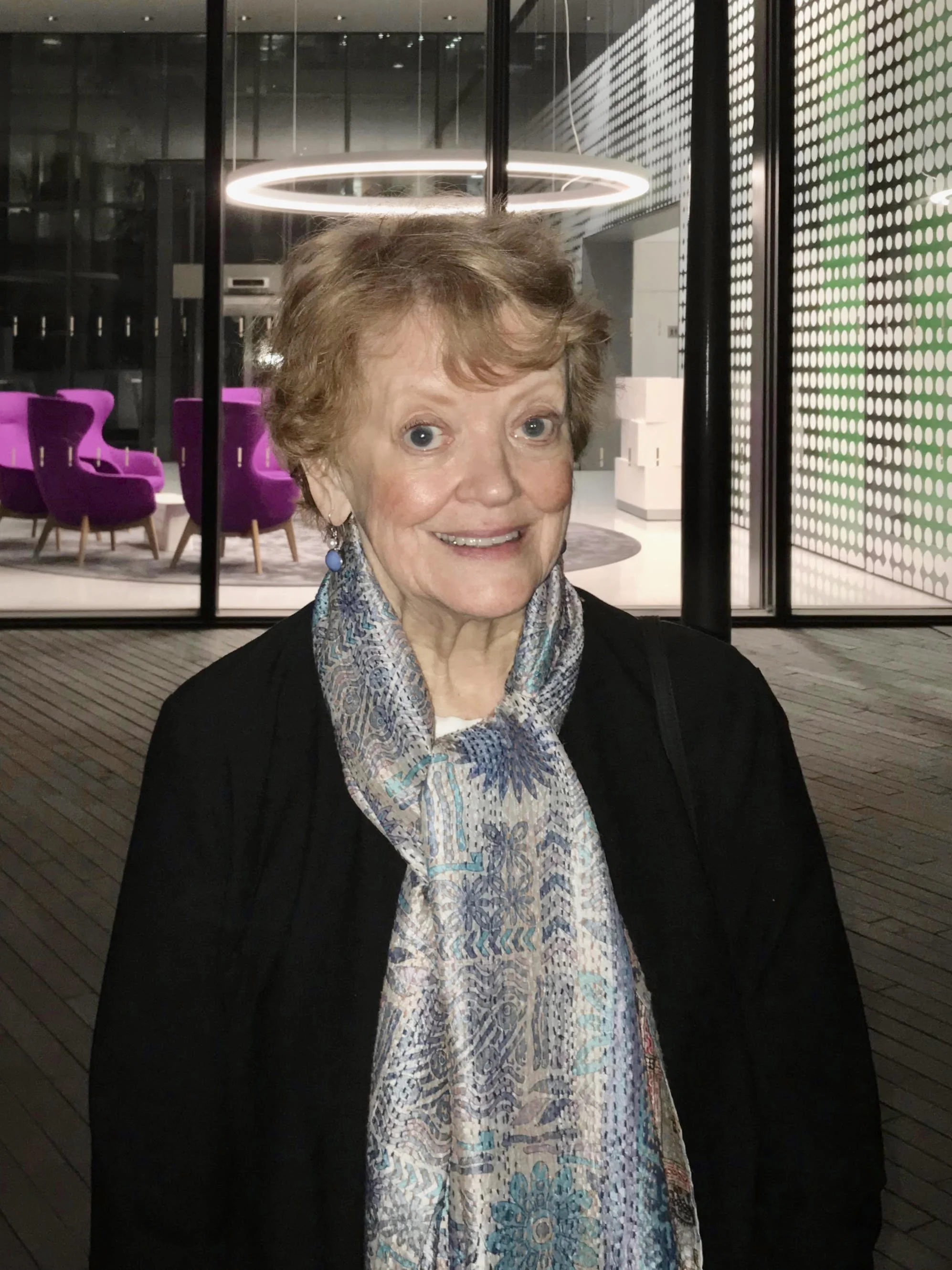
I would like to express my gratitude for the role that Judy Houghteling played in my life as a friend and mentor.
Judy came into my life as the companion of my father-in-law. As fellow Aquarian bookbinders we bonded instantly, even when I “mowed the lawn under her feet” as the French say, beating her to the punch binding my father-in-law’s book before she had the time to do it.
She supported my desire to change careers and become a conservator from the get go. She put me in touch with Maureen Duke, and from our conversations, it became clear that Camberwell College was the right choice for me. Judy went on paying relevant publications subscriptions and memberships for me while I was studying. She put me in touch with Karen Zukor, allowing me to add valuable internships to my curriculum, while getting acquainted with California. Judy also had my work displayed in several exhibitions, and provided the opportunity for me to give a talk at the The American Bookbinders Museum.
For the past 12 years, Judy was a constant presence in our family life, either visiting every year while we lived in London, and certainly more so now that we moved to San Francisco, when we would see each other weekly. She often said I was “the son she’d never had”.
After she decided she would stop bookbinding, she gave me her bookbinding-related library and documentation as well as all her equipment and materials. I never thought one could accumulate that many bone folders!
Towards the end as her illness progressed, she wouldn’t say much but she would hold my hand and I felt we both acknowledged a special connection. I’ve been a mentor for others, but the added layer of like-mindedness and friendship makes the bond very special and I hope I can replicate that for someone else in the future to honor her memory and legacy.
I took that photo near our place in London, an evening we were goofing around on our way back from dinner, ten years ago.
I knew Judy since my first bookbinding class with Eleanore Ramsey, as Judy and I were in Eleanore's class of 2 on Monday afternoons. During this time I joined the Hand Bookbinders, which met the first Tuesday of each month excluding summers. Judy was often the president and most often the so-called coordinator who brought snacks in a little suitcase on wheels. She was so very nice to many of the members and when I was 75 I told her I was marrying again. She immediately scheduled an engagement dinner for Bob and me in her lovely home overlooking the bay. She invited my family and it was lovely. Fourteen years before this my first husband, Paul, was quite ill and found it hard to eat. I was telling Judy this in bookbinding class and when I got home I found she had brought jello by in different colors and shapes. He loved it. Judy then continued to do this every week unti he died, altogether about 8 weeks.
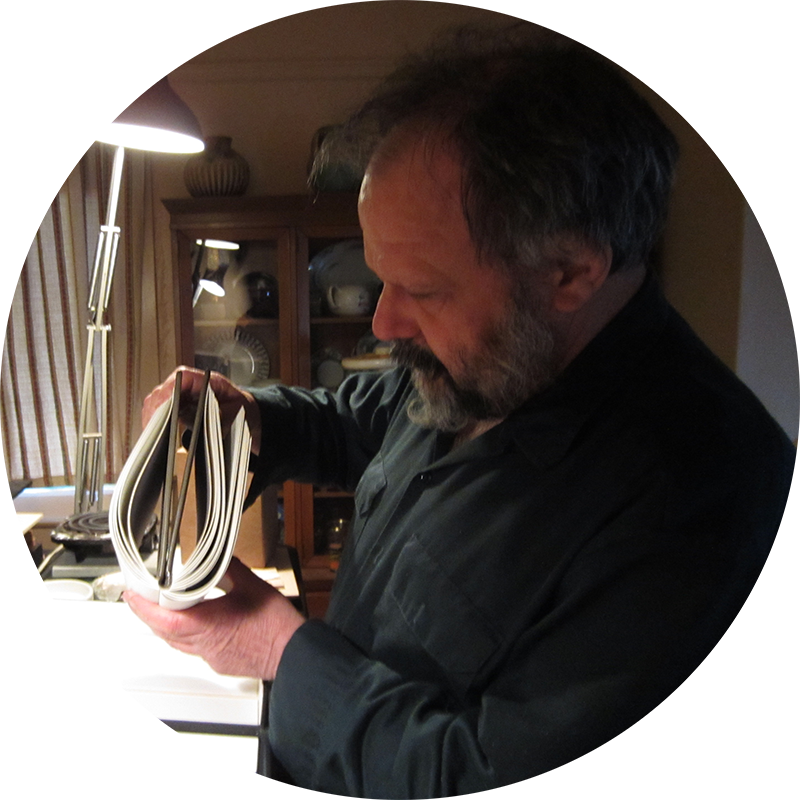
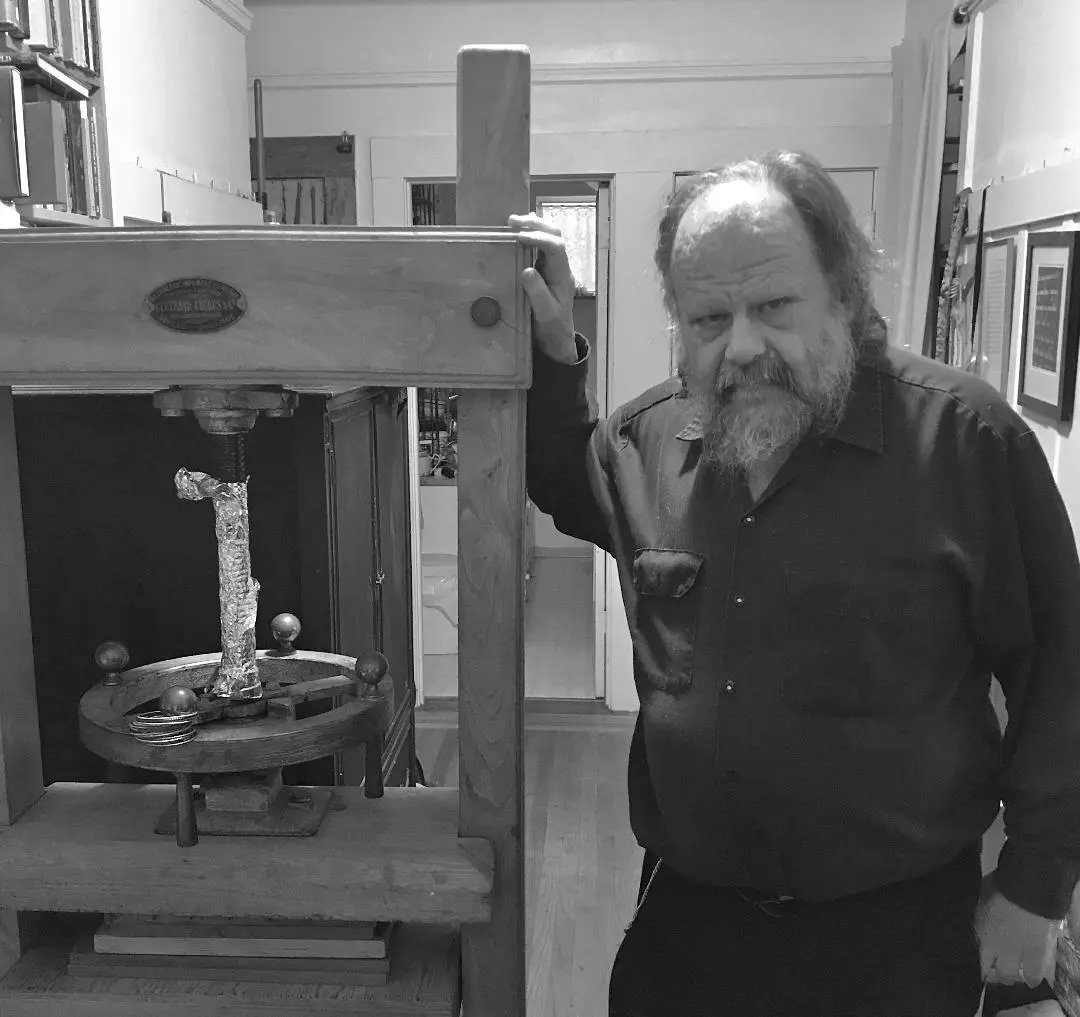
Tom Conroy, historian of bookbinding and skilled practitioner, died on Nov. 11 in his North Berkeley home. He was 73.
Tom was a working historian or, perhaps, an experimental archaeologist of the book. Not only did he train as a librarian, he studied bookbinding and conservation at Berkeley’s Capricornus School of Bookbinding and Art Restoration, a highly respected school established by Theo and Anne Kahle.
He also wrote about nineteenth-century toolmaking for bookbinding and woodworking. With Tom’s passing, there will be a huge gap left in the quality of original research and the synthesis of practical experience produced by his encyclopedic knowledge of the history of the book and his considerable bench skills.
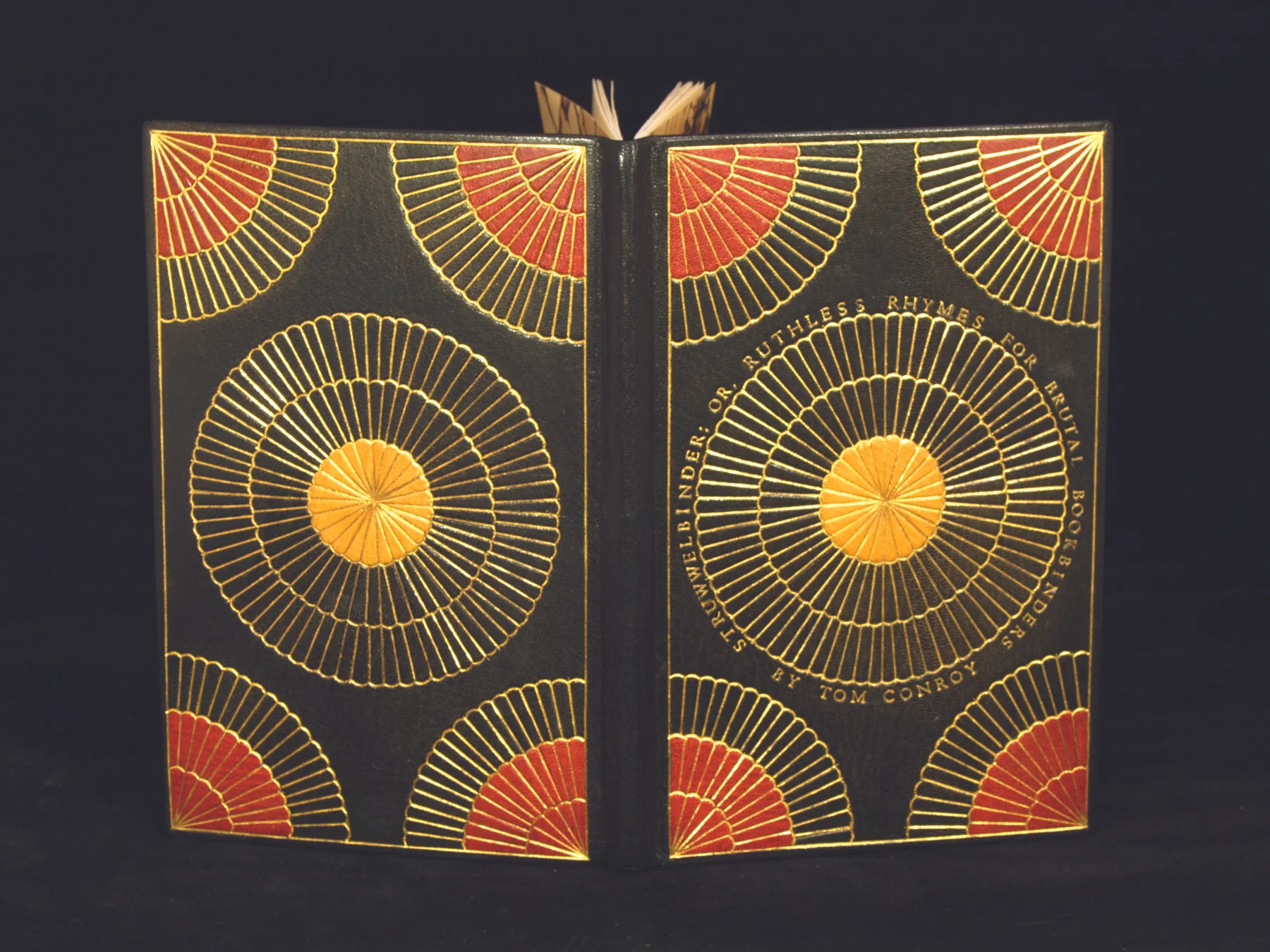
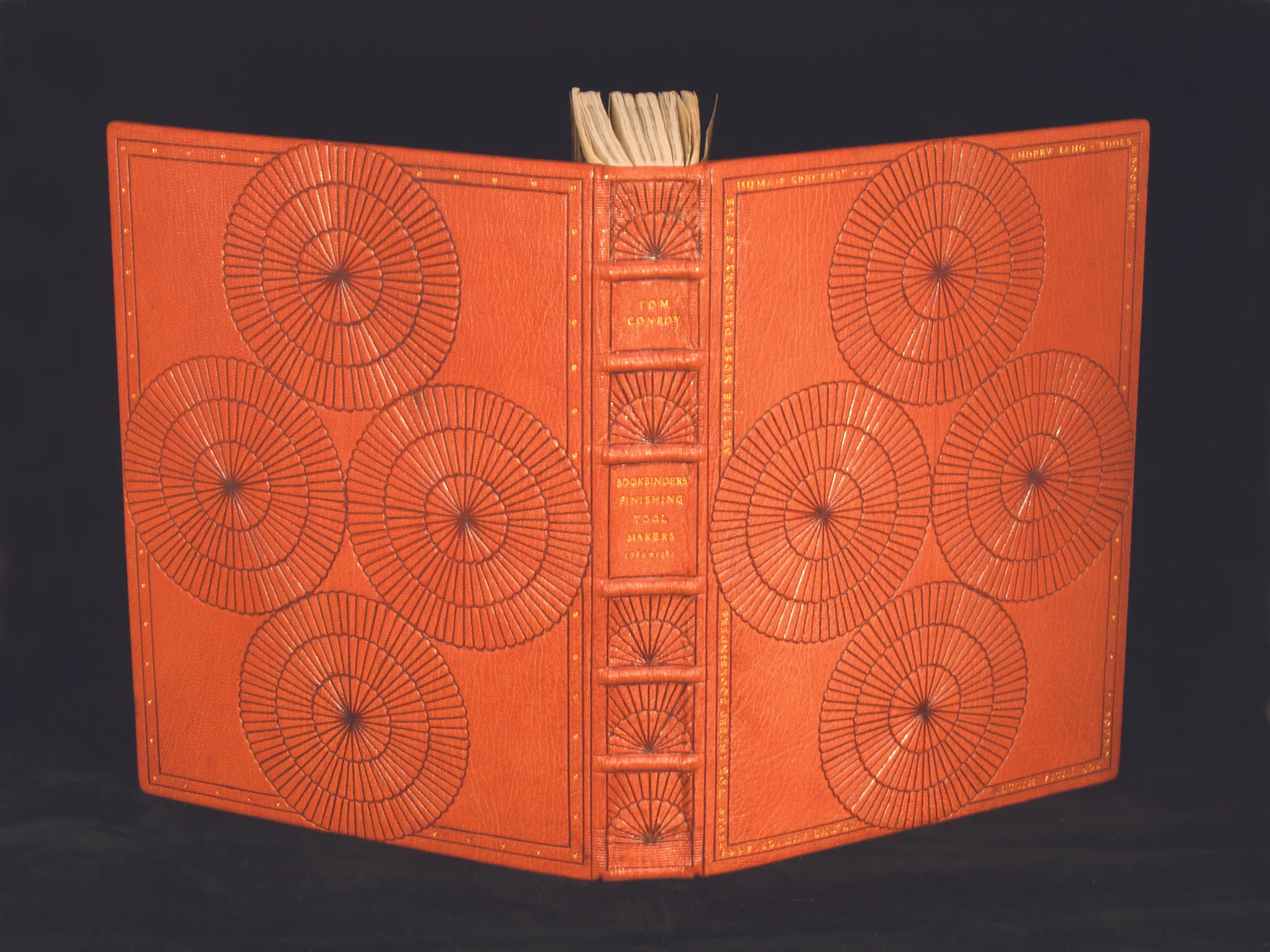
Tom researched bookbinding toolmakers in England and in the United States, tracking down a particular tool to its likely origin based on a few clues from the tool itself. Tom published foundational articles on numerous topics ranging from the finishing tools employed by Irish and Scottish binders, a genealogy of American binders, a biography of 20th-century binder Jean Eschmann, Irish floodgrass bindings, and Scottish wheel bindings; his yet-unpublished research includes excellent work on backing hammers and bookbinding ploughs. During his life he was respected by and consulted by numerous colleagues on the history of bookbinding tools and machinery. His family of the book is grieving the loss of a brilliant mind and generous friend.
They also mourn the loss of a man of both tenderness and wit, who could spout Victorian verse or dirty limericks or both to entertain a friend driving him to an airport, who could repeat the entire sequence of Abbott and Costello’s fabulous bit “Who’s On First?” and tear your face off if you tried to edit his writing and messed up his punctuation and flow in the process. He could tango with the best of them and never stopped his research with the idea that he had “found everything there was to find.” He knew better.
I have lived in Berkeley for 35 years, a few blocks away from Tom's house on Edith Street. Over these years I have known Tom and will miss his familiar figure, out and about. I have seen him walking around Berkeley or sometimes sitting on the sidewalk outside the bookstore, reading intently, in the Conroy style. I often stopped to give him a ride.
He was involved locally in the Hand Bookbinders of California; he contributed to the running of the organization and exhibited his bindings in their yearly show.
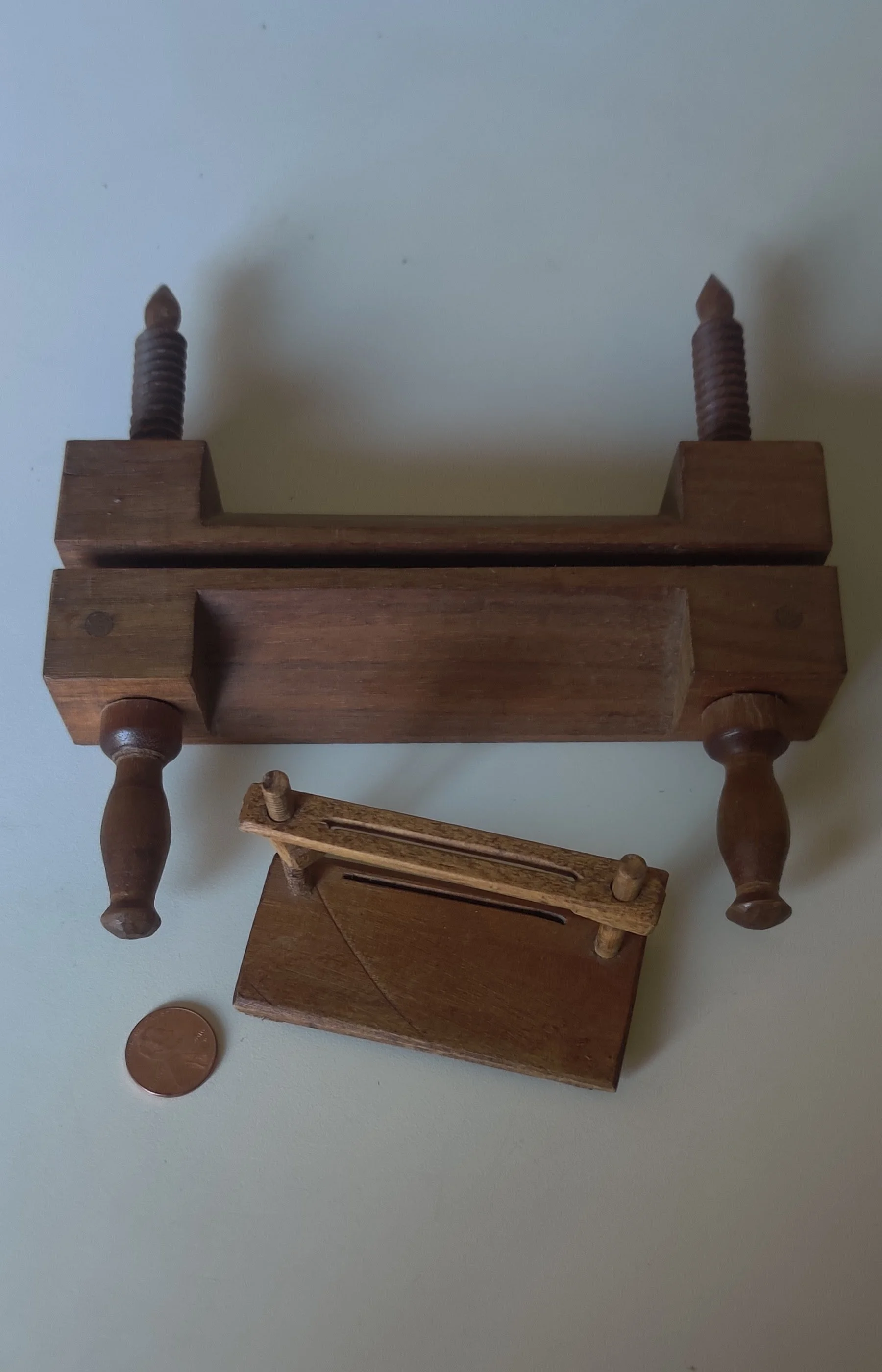
I would visit him to talk about bookbinding history and his woodworking knowledge. He made me a standard laying press as well as a beautifully crafted miniature one. Tom also made me a miniature sewing frame when I was thinking of binding miniature books.
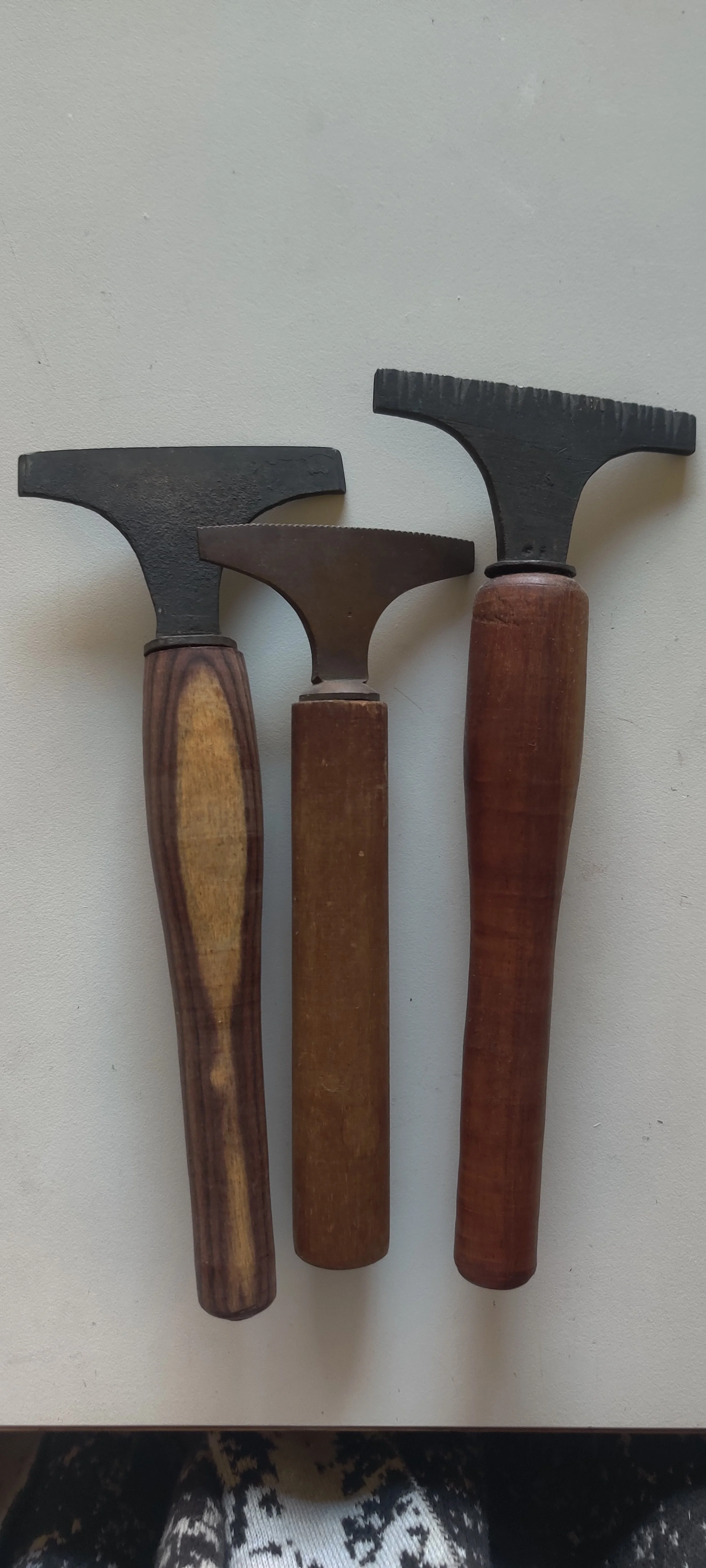
I also treasure the tool handles he fabricated, insisting that the asbestos handles on the finishing tools that Mr. Cockerell had given me were too dangerous. He replaced them with exotic wooden handles that he sourced from MacBeath Lumber on Ashby Avenue in Berkeley. Tom had a deep knowledge of bookbinding materials, particularly the various species of wood appropriate to the job. He was a truly skilled woodworker and turner.
He has been an enormous resource to the conservation bookbinding community. Many of us turned to him for information about the history of our profession and its materials. He was well known and respected locally, nationally, and internationally. He wrote articles and regularly gave talks at conferences. He would chastise me for my lack of discipline, and I apologize to him and our community at large for not writing about him with more detail and rigor! I am aware that I have not included the references, footnotes, and scholarly apparatus that he would always insist on, only touching on some of his contributions and achievements.
Tom’s friends and colleagues all appreciated his unwavering commitment to rigorous, comprehensive research, and his passing will leave a void in our community; he will be sorely missed.
Farewell, Tom.
(To read a more comprehensive obituary of his life and achievements see the Berkeleyside article written by his neighbour, Alan Bernheimer https://www.berkeleyside.org/2025/11/21/tom-conroy-obituary )
In September of 2000, with the y2k scare safely in the rearview mirror, I found myself recently married and newly relocated to San Francisco. I had met Dominic Riley at PBI the year before, so he introduced me around and encouraged me to get involved with the Hand Bookbinders of California. It was through HBC that I became aware of the bookbinding community in the Bay Area and where I initially got to know Tom Conroy.
While Tom and I approached bookbinding from very different perspectives, we enjoyed a good deal of camaraderie as well as many lively discussions. And of course, Tom was always right, even on the rare occasions where he might have been incorrect. Eventually, as I began building up my home studio, I asked Tom to help me with some of the pieces I needed. Over the course of a few months at Tom's house in Berkeley, we hand-crafted a sewing frame that can be collapsed and which also has two crossbars for different supports (complete with a knocking down stick) and a finishing press.
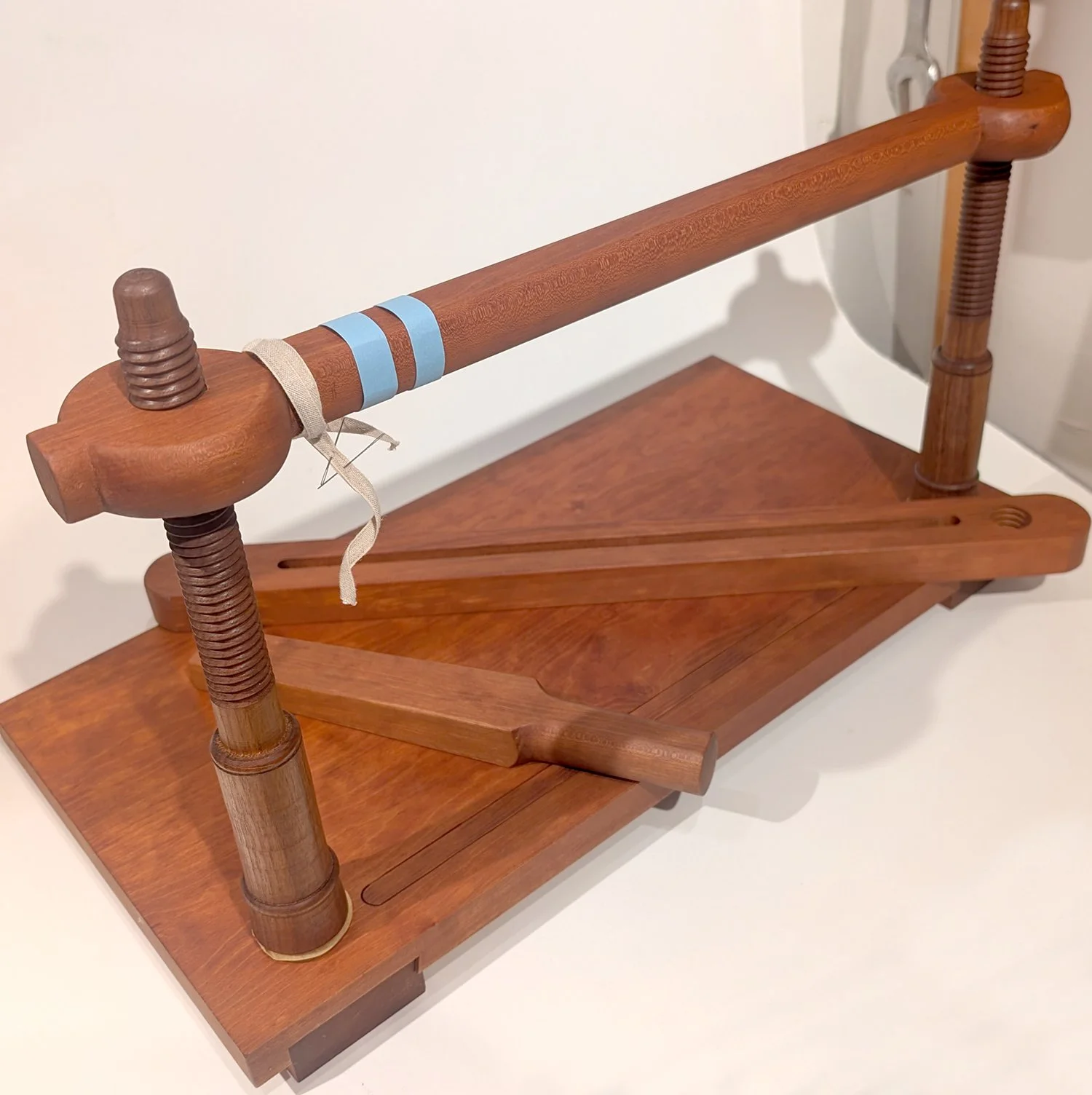
Suffice it to say that I still use and cherish these tools in my bindery. But I also cherish the memory, the process, and the journey we went on to create them. We started with a trip to MacBeath Hardwoods in Berkeley to buy the solid pieces of cherry and walnut that we would use. Tom walked me through rough-cutting and shaping of everything, right down to hand-turning the wooden screws both tools needed. We sanded, polished, and oiled the final surfaces. We even melted lead weights in Tom's kitchen to pour into the center of the knocking down stick to give it heft.
Ultimately, my career path led me to becoming a letterpress printer and educator more than a traditional bookbinder. Making books became more of an avocation than my paying vocation. But I still maintain my bindery at home, and look forward to greater chunks of free time to pursue making books. All that said, not only do I still value the tools I built with Tom, I truly appreciate the care he took in showing me not just how it was done, but why it was done that way, and that doing things properly still matters.
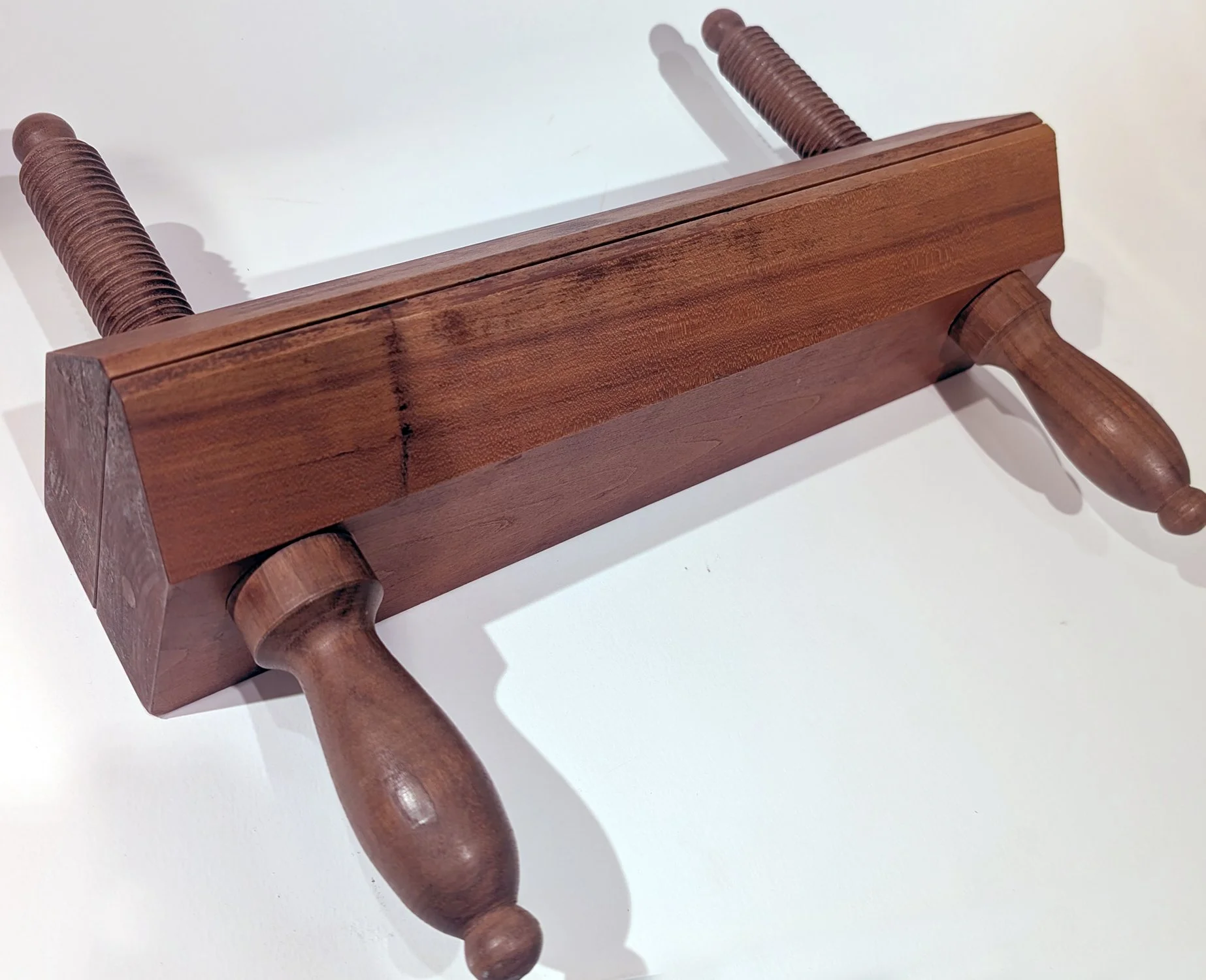
So now, nearly 25 years later, as I am now adding my own letterpress shop to my home studio, my approach reflects the time Tom spent with me. I have an iron handpress, and the printing goes slow as hell. There is no motor or power cord needed on my Reliance, and my plan is to only print from hand-set type. The inking is done with a two-handed brayer and requires multiple passes. I move deliberately, thinking of the how, the why, and focusing on what matters. And when I finally have enough time to set and print a full book, I'll sew it on the frame and finish it in the press I built together with Tom. Because the how and the why are also a big part of why it matters.
Thank you, Tom.